> ## Documentation Index
> Fetch the complete documentation index at: https://docs.mana.re/llms.txt
> Use this file to discover all available pages before exploring further.
# Richer Souls in Game Character Design, with Mana
> Why inner life comes before plot in game narrative, and how tooling can support listening, relating, and voicing without replacing the writer.
It is a common trap in narrative design (and writing in general) to obsess over the *events* of a story before truly understanding the *people* those events happen to. Teams rush to map inciting incidents, branching quest lines, and boss battles, then retrofit characters into the plot like cardboard cutouts.
Players rarely remember the exact sequence of a quest. They remember the people: the companions who fought beside them, the antagonists who challenged their worldview.
In her 1924 essay *Mr. Bennett and Mrs. Brown*, Virginia Woolf criticized writers who lavished attention on setting, plot, and the fabric of a train carriage while ignoring the complex, flickering inner life of the passenger in front of them. The primary aim of writing, she argued, should be the capture of that inner life: the character's "soul."
Henry James put the craft tension in a single pair of questions: *"What is character but the determination of incident? What is incident but the illustration of character?"* Without a felt sense of *who* someone is, plot reads hollow no matter how expensive the set pieces.
That tension is a large part of why we built **Mana**: an environment that invites you to dwell on the *who* before the *what* takes over production. What follows is not a checklist of clicks. It is a way of thinking about three kinds of work (**listening**, **relating**, and **voicing**) and where a writing tool can sit respectfully beside them.
## When the tool becomes the character
In games, "knowing" a character is often collapsed into **filing** them: a row in a spreadsheet, a template in a wiki, a field for faction and stats. Those formats are useful for pipelines, but the moment structure arrives too early, something fragile gets lost. The half-formed hunch, the contradiction that has not earned a label yet, the line of dialogue that does not fit any quest ID: these are not bugs in the process. They *are* the process.
The failure mode is not disorganization. It is **premature legibility**: the character becomes what the sheet can store, not what the story still needs to discover.
## Listening before you file
Rich characters rarely arrive fully formed. They begin as noise: a voice half-heard, a flaw that embarrasses you, a motivation that contradicts the pitch doc. Forcing that material straight into a rigid character sheet or a branching dialogue schema often kills the spark. The work of this phase is closer to **eavesdropping** than to documentation.
**Scratches** in Mana are built for that kind of listening: a low-friction place to catch fears, habits, scraps of speech, and questions you are not ready to answer. Nothing here has to be canonical. The point is to leave room for the character to stay messy until they earn a shape.
 ## Relating, not just recording
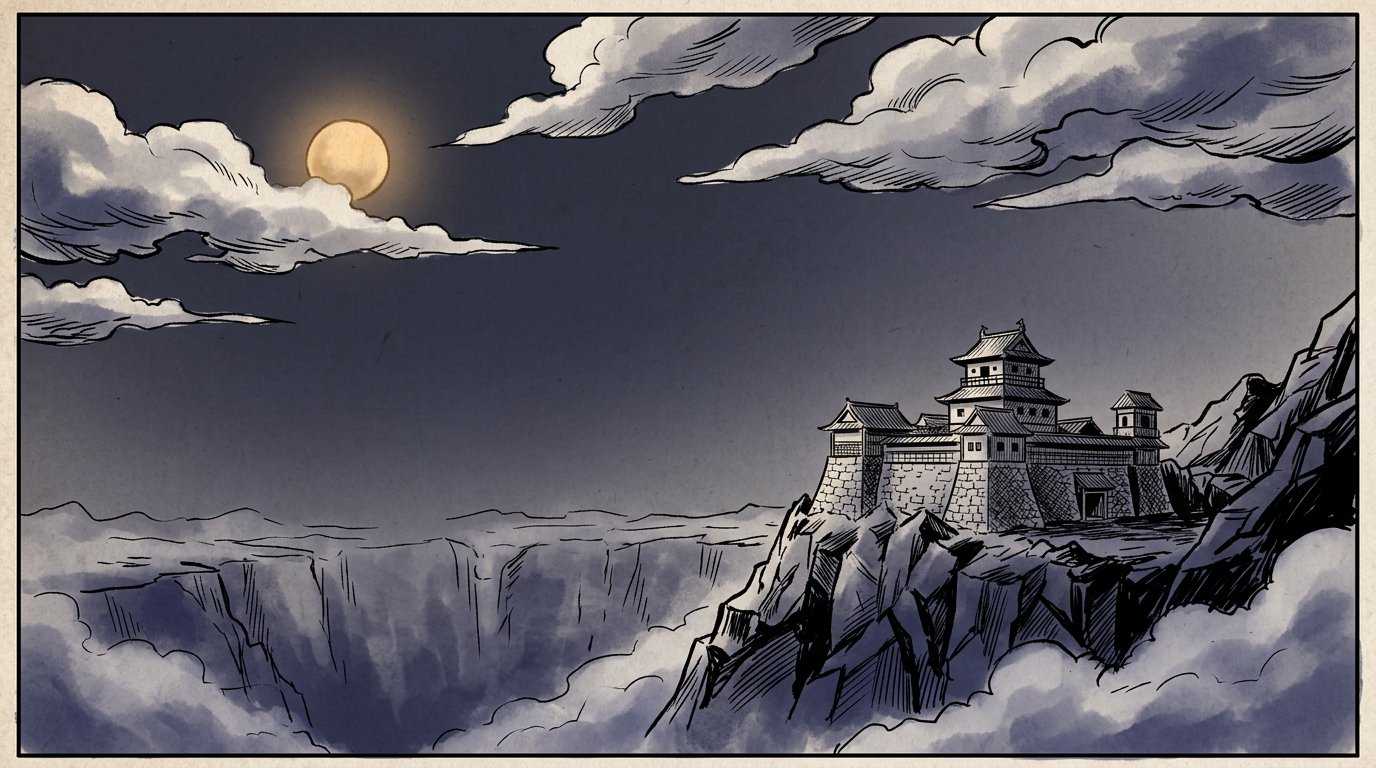
Structure still matters, but the most useful structure for narrative design is often **relational**, not tabular. A character is not only "Faction: X" and "Role: Y." They are someone who grew up somewhere, owes someone, broke a rule once, and pretends not to care about something that defines them. Those connections are the texture players feel in a bark or a side quest.
The **Atlas** is where that web lives in Mana: links between people, places, lore, and rules, not as a dump of facts but as a **graph of meaning** you can navigate while you still remember *why* two entries belong together. The goal is not a bigger wiki. It is an anchor so the character's inner life stays tied to the world that shaped it.
## Relating, not just recording
Structure still matters, but the most useful structure for narrative design is often **relational**, not tabular. A character is not only "Faction: X" and "Role: Y." They are someone who grew up somewhere, owes someone, broke a rule once, and pretends not to care about something that defines them. Those connections are the texture players feel in a bark or a side quest.
The **Atlas** is where that web lives in Mana: links between people, places, lore, and rules, not as a dump of facts but as a **graph of meaning** you can navigate while you still remember *why* two entries belong together. The goal is not a bigger wiki. It is an anchor so the character's inner life stays tied to the world that shaped it.
 ## Voicing with the soul in the room
Eventually, the work lands in language: cutscenes, barks, quest text, tooltips. That is where lore and drafting usually **split**: different tools, different tabs, a context switch every time you forget how someone sounds. The cost is not only time; it is **voice**. When the spreadsheet is far from the sentence, dialogue drifts toward generic conflict and expository convenience.
Mana tries to keep the soul in your periphery. In the focused **Editor**, you can hold an Atlas entry for the speaking character in the **right sidebar**. Motivations, secrets, and linked history sit next to the line you are writing, so the sentence can be driven by *who* is speaking, not only by what the beat chart demands.
## Voicing with the soul in the room
Eventually, the work lands in language: cutscenes, barks, quest text, tooltips. That is where lore and drafting usually **split**: different tools, different tabs, a context switch every time you forget how someone sounds. The cost is not only time; it is **voice**. When the spreadsheet is far from the sentence, dialogue drifts toward generic conflict and expository convenience.
Mana tries to keep the soul in your periphery. In the focused **Editor**, you can hold an Atlas entry for the speaking character in the **right sidebar**. Motivations, secrets, and linked history sit next to the line you are writing, so the sentence can be driven by *who* is speaking, not only by what the beat chart demands.
 ## Production and the flattening force
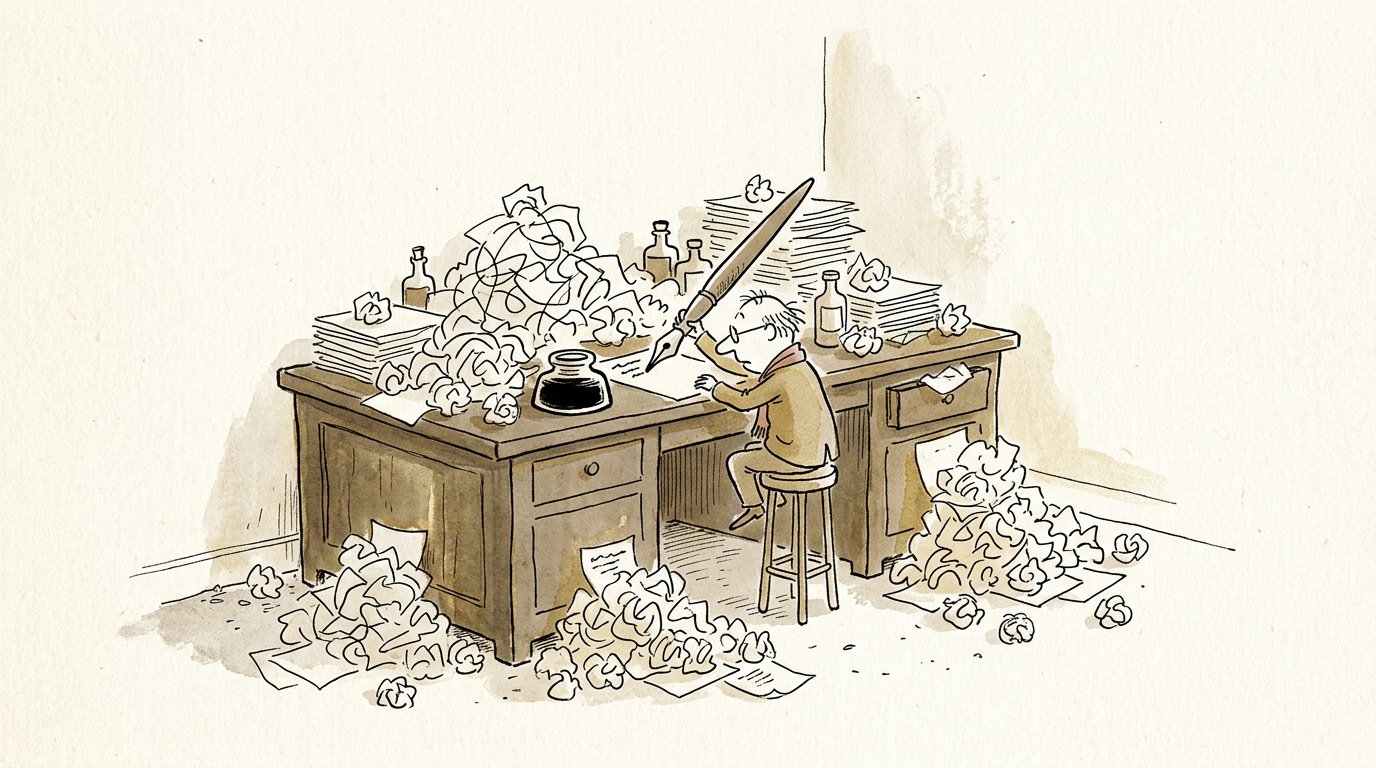
Game development is chaotic. Over time, depth gets shaved for scope: a quest shortens, a mechanic shifts, a character becomes a mouthpiece for exposition. No tool can immunize a project to pressure, but tooling can make it **harder to forget** what you once knew about a person. When listening has a home, when relationships stay navigable, and when drafting happens within sight of that graph, the creative intent has something to push back with when the schedule tightens.
We are not trying to replace the struggle of writing. We are trying to keep **memory, continuity, and inner life** from dissolving the moment production accelerates. The sentence still has to be yours, but it should not have to fight the pipeline alone.
## Production and the flattening force
Game development is chaotic. Over time, depth gets shaved for scope: a quest shortens, a mechanic shifts, a character becomes a mouthpiece for exposition. No tool can immunize a project to pressure, but tooling can make it **harder to forget** what you once knew about a person. When listening has a home, when relationships stay navigable, and when drafting happens within sight of that graph, the creative intent has something to push back with when the schedule tightens.
We are not trying to replace the struggle of writing. We are trying to keep **memory, continuity, and inner life** from dissolving the moment production accelerates. The sentence still has to be yours, but it should not have to fight the pipeline alone.